

Stitch & Tell
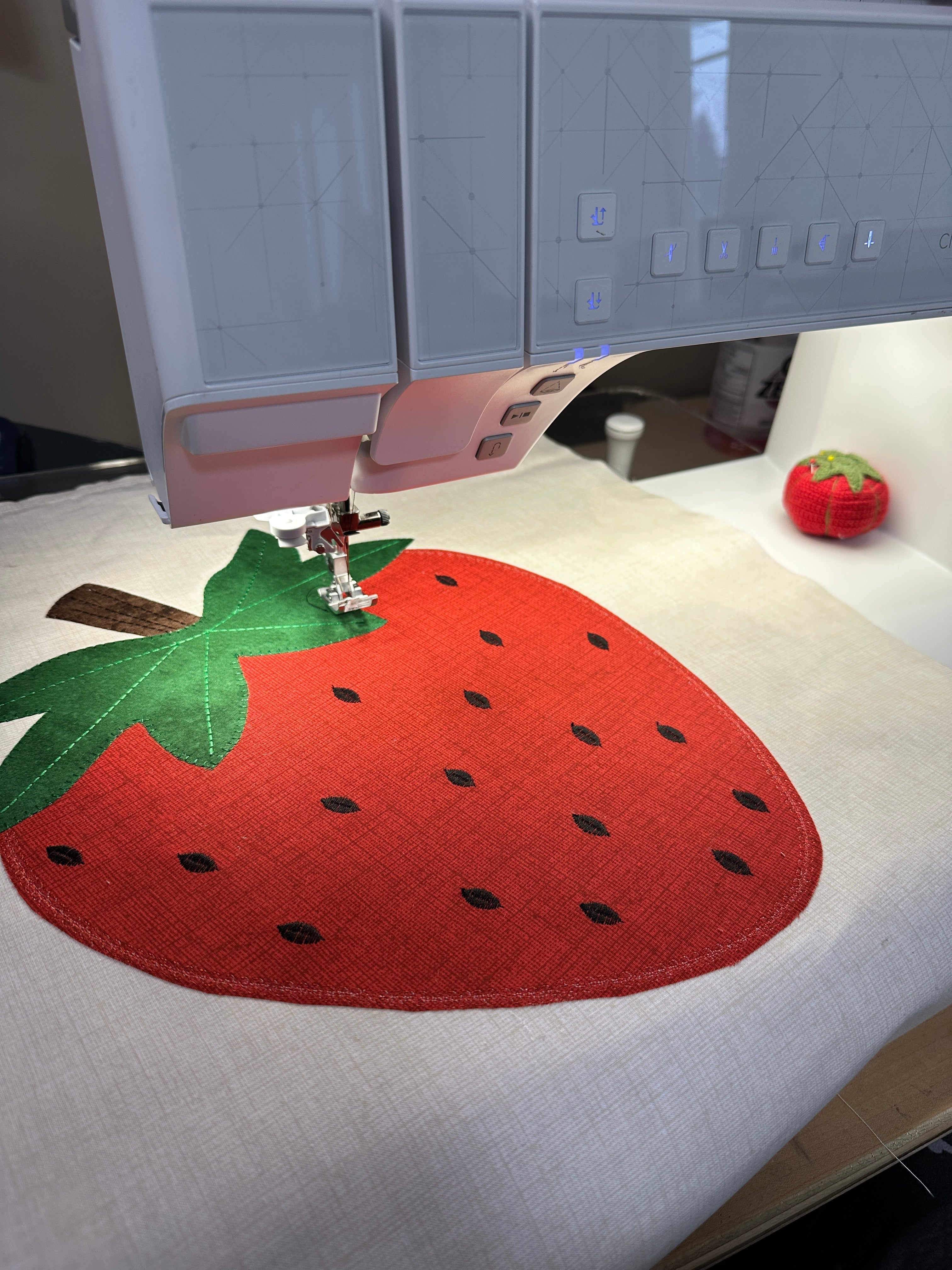

Do you have to go to product training ??
This is why I make time—out of a very full life - to attend product shows and training.
Learn more
Love it or Leave it !
If you don’t love it… you’ll leave it.It’s that simple. Projects don’t get finished when the fabric doesn’t speak to you — the color, the print, the texture, the vibe. Quilting is supposed to be fun, not emotional torture. If you hate it, change it. Even if you’ve already cut it. Even if you’ve sewn half the blocks. Even if you spent money on it (gasp!).Better to pivot than abandon it in a project pile of guilt.
Learn more
Why am I holding the Seam Ripper.
If you see me with a seam ripper in class, it means someone is learning. Class time is too valuable to spend making friends with Mr. Seam Ripper — that’s my job. My students keep sewing while I handle the unstitching.
Learn more
Why we all need a pile of cheap fabric!
Before you ever cut into the good fabric, you need to make it once. Classes are for learning, not perfection. Grab the cheap stuff, the ugly fabric, or the leftovers you don’t know what to do with yet. Make mistakes, learn what works for you, and don’t be afraid to start over. Then — and only then — break out the good fabric.
Learn more
Where Top 7 @ 7 started.
As we approach our 5th year TOP 7@7 Anniversary ( March 2), it makes me reflect on where it started! After surviving 2020, we needed to find ways to be "busy" when traffic at the store was slow due to weather. We decided to try a live Facebook video and offer crazy sale prices on fabrics and notions . Snow Day sales were such a success, Jenn suggested maybe we could do one evening a week, we would log on at a certain time and do the same as a Snow Day sale ! The idea developed from there. I remember being a teenager and listening to the top 10 on the radio, I thought, 7pm was after supper time and we could make sure to get the biggest audience possible. Then next thing you know, we developed Top 7@7, got a logo and a weekly show. It may have changed over the years, from a better tripod to hold the phone (no more dropping it in the garbage while live....), a new process for customers to order the SALE items, and using our Facebook live to talk about our upcoming events, create buzz for new classes coming up, or raising funds for great causes ! I still get super nervous before hitting the go button, and I have found ways to deal with days were things don't quite line up for a live show. We have done lives while on the road, pre-recorded....and that ONE TIME...I forgot, only to be reminded by Pat Jan 1, 2024, that I had missed the show and sale all together ! I usually forget half the things I wanted to say till AFTER I log off, I have laugh so hard I cried, cried and could barely speak. The best part of Top 7 is the message I receive from customers who tell me they love to watch, the visitors to the store who want a quick picture or advice, and best of all, seeing that after 5 years, we still have a growing audience ! Thank you ! For helping us make memories, one stitch at a time! Vickie
Learn more
Who gets to be a quilter?
You only need to make one quilt to be a quilter. That’s it. Quilting starts with wanting to learn - not owning all the tools or making a perfect project. Every quilter has questioned their life choices late at night with a seam ripper in hand… and kept going anyway. Quilting isn’t about doing it perfectly. It’s about doing it, learning from it, and starting the next one just a little wiser (and usually with more fabric).
Learn more
Why is the shop open on Sunday?
I have been asked this question many times during the years we have owned the shop and chose to open Sundays and at least one evening a week. I know the questions comes out of concern that I would get no family time if I am open 7 days a week Are we busy? not always. Is it worth it? Absolutely! There are many reasons we are open on Sundays, even if it is only four hours. It is the same reason we are open on Thursdays till 7pm. To better serve our customers! We are a full service quilt and cross stitch shop! We are doing it all, from selling supplies, machines, offering repair and maintenance service and quilting and binding services. There are a surprisingly large number of customers that can't get to the shop during week days because we close at 5pm. Some can't always make it in to the shop on a Saturday due to family responsibilities, kids sports or activities that often take up most of Saturday. These are the customers that we see in the extended hours. One lady we see almost every Sunday with very few exceptions. It is her ME time. She sometimes comes in looking for something specific, sometimes for the inspiration, and yes, sometimes out of habit. There is always something that can be done at the shop, from putting away inventory, to prepping kits, we often had classes this fall, and now, we even have sew days! We are blessed with a team that makes it possible to have extend hours. In the summer we get many vacationers that are only passing thru on the weekend and have told us that we were the only spot that they were able to visit that was open. In the winter we have lots of customers that are in town for sports tournaments or other events that said they made sure to be able to squeeze in as many places as possible and loved that we were open on Sunday and would get to spend lots of time checking things out and not worrying they would miss another shop! I love helping people create, encouraging people to become or continue to be creative, and making our shop accessible during hours that other craft shops are close is a great way to do that. Now don't get me wrong, in the end i am a small business owner, we don't mind helping you purchase things while you are here ! ;)
Learn more
My lines or yours ?
I used to cut fabric using the lines on my mat and told myself it worked just fine. My seams looked right… but my points didn’t match and pieces were sometimes a hair short. Obviously, I ignored that for a while. Because stubborn. Turns out that tiny difference—cutting on different sides of the mat lines—was causing big accuracy issues. Who knew? The fix wasn’t a new ruler or a fancy mat. It was switching to the lines on my ruler and committing to consistency. Straighter cuts, better alignment, and way fewer “why doesn’t this fit?!” moments. Sometimes the biggest quilting breakthroughs come from changing how you use your tools—not buying new ones.
Learn more
I piece my quilt with polyester thread and I am not afraid to say it !
For years I was told you shouldn’t piece quilts with polyester thread.But when I asked why, the answers never really held up. Traditionally, quilters matched fibers—cotton fabric meant cotton thread. That made sense years ago when polyester thread was stiff, yellowed over time, melted under hot irons, and cotton fabric shrank a lot more. Back then, polyester really could damage cotton. But things have changed.
Learn more
To wash or not to wash, that is the question, but what is the answer?
You either do, or you don't. I think most of us are firm on what side of the fence we sit on, but do we really know why? I am sure if I asked him 100 quilters if they pre wash their fabric or not we would get a 50/50 split. If I asked them why, I am not sure everyone could answer me :)! Some quilters pre wash with a purpose, others out of habit or because that is how they were taught to do it. For those with purpose, their response is usually based on a few things, wanting to make sure the fabric doesn’t run, prewashing = preshrinking or the fact that washing the fabric removes the sizing product used in manufacturing. How many of you just said “Sizing product?” I can’t say that I didn’t google the actual term used for this. I usually call it starch, but I knew it wasn’t the actual name of what it is and it helped me to be able to better explain what it is and why it’s there. When quilting fabric (and maybe others) are manufactured, there is a process before printing where a sizing product is applied to help make the fabric a bit stiffer, helps the printing to have sharper edges and prevents ink bleeding. It helps fabric keep its shape on the bolt, and gives it a finished look for the shelf! One spot I was looking for a better definition referred to is as hairspray for fabric ( I couldn’t find where I saw that but it sure stuck with me!) keeping everything in it’s place, a temporary product meant to be washed out, but no clear reason to wash before or after . The Pre-washers like to remove this product, make the fabric softer and ensure any shrinking will happen before the quilting. The Non-washers prefer the fabric to remain a bit stiffer helping with more precise cuts, less shifting, a bit of stability on bias cut pieces, less threads shredding and the fact that you can get home from The Quiltery and get to work ! No waiting! I am a non-washer. I don’t have the patience to wait and I like to use the crisp edge of the fold on my cuts. I know some quilters will iron and re-starch the fabric but for me, I prefer the natural fold. In the end it is a personal choice. Whether you do it with purpose, do it out of habit or because you were taught to, the trick is to be consistent. I tell customers who ask my opinion on the matter to do the same thing to all the fabric in your project! If you aren't sure if all the fabric you have is washed, then wash it all. If you wash the fabric for the top (your flimsy) then wash the backing! Let it all react, shrink or crinkle, all at the same time in the same way ! Helping you make memories one stitch at a time!
Learn more
A Teacher? Who me?
Teaching isn’t about having all the answers - it’s about learning, experimenting, and creating together. What started as a way to rebuild classes after the pandemic turned into a passion for helping quilters and makers grow their skills, confidence, and creativity - one stitch at a time.
Learn more
How I love you Bloc Loc Ruler, let me count the ways
What I thought would be a quick Christmas quilt turned into a serious time crunch. With hundreds of half-square triangles to trim, progress slowed fast. When I finally tried a Bloc Loc ruler, the difference was undeniable — trimming was easier, more accurate, and shockingly faster. After timing it, I discovered it took one-third of the time compared to trimming without it. A game-changer I now reach for every time. Helping you make memories one step at a time.
Learn more